Addressing Pest Challenges in Large-Scale Sugarcane Estates
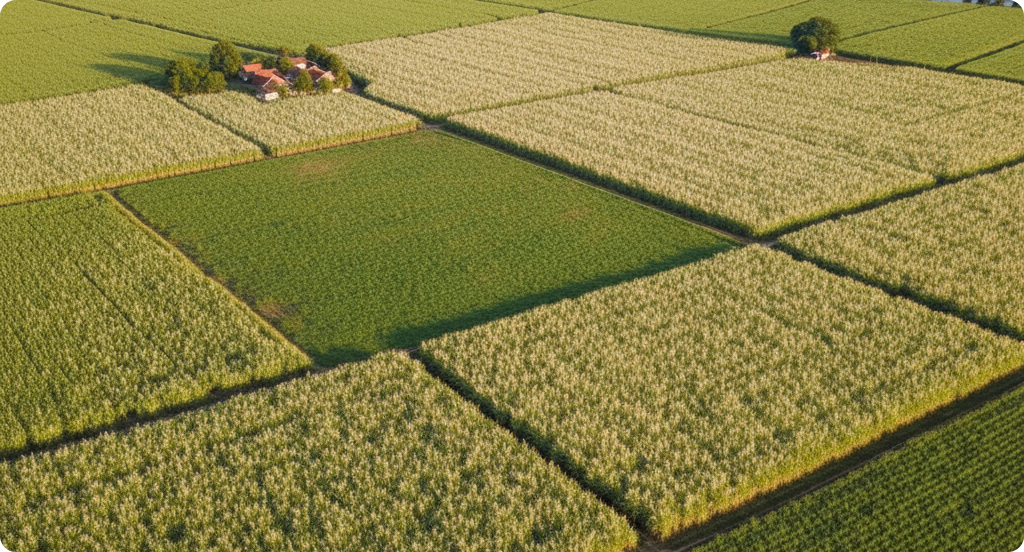
Sugarcane cultivation at scale is a high-stakes agricultural activity where crop health and yield depend on consistent and effective pest management. Common pests in sugarcane plantations, such as stem borers, caterpillars, and leaf-feeding insects, can significantly reduce yield if left uncontrolled. Traditional approaches to pest management often rely on broad-spectrum chemical spraying, which, while effective in the short term, presents several challenges. These include potential environmental contamination, disruption of beneficial insect populations, intensive labor requirements, and the need for specialized ground machinery.
For plantation managers and agronomists, there is an increasing demand for solutions that deliver precision pest control, operational efficiency, and accountability. Large estates, often spanning hundreds or thousands of hectares, require pest management strategies that can operate at scale while minimizing human error and environmental impact.
Limitations of Conventional Pest Management Methods
Conventional chemical spraying methods typically apply pesticides uniformly across entire plantation blocks, without consideration for pest distribution patterns. This approach can result in:
Over-application of chemicals, increasing costs and potential harm to the environment.
Disturbance to beneficial insect populations, such as predatory wasps and pollinators.
Labor-intensive operations, requiring multiple operators and ground vehicles.
Operational inefficiencies, including uneven coverage and missed areas.
Limited traceability, making it difficult to track the exact distribution of pest control measures for reporting or compliance purposes.
Additionally, monitoring the effectiveness of traditional pest interventions often relies on manual sampling, which is time-consuming and may not provide comprehensive insights across large estates.
Introduction of High-Precision Drone-Based Pest Management
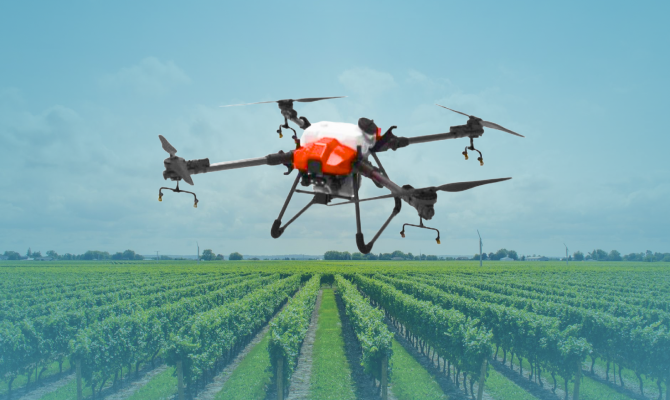
To address these challenges, advanced drone-based systems have emerged that integrate GPS-guided flight paths, precision capsule deployment mechanisms, and automated data logging and traceability. These systems are designed to deliver natural predators, such as Trichogramma wasps, directly to the plant-level target zones in sugarcane fields.
Trichogramma, a naturally occurring parasitoid wasp, has been widely used in integrated pest management programs. These tiny insects parasitize the eggs of pests like stem borers and caterpillars, preventing them from maturing and damaging crops. Before drone deployment became available, Trichogramma was distributed manually where laborers would scatter Trichogramma-containing cards (Tricho-cards) across plantation blocks. This approach was slow, physically demanding, and less consistent.
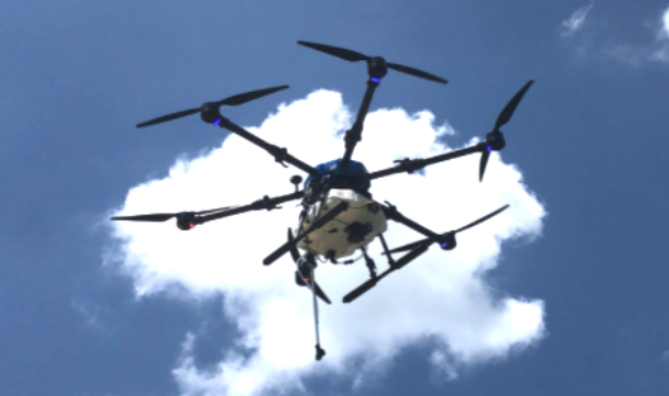
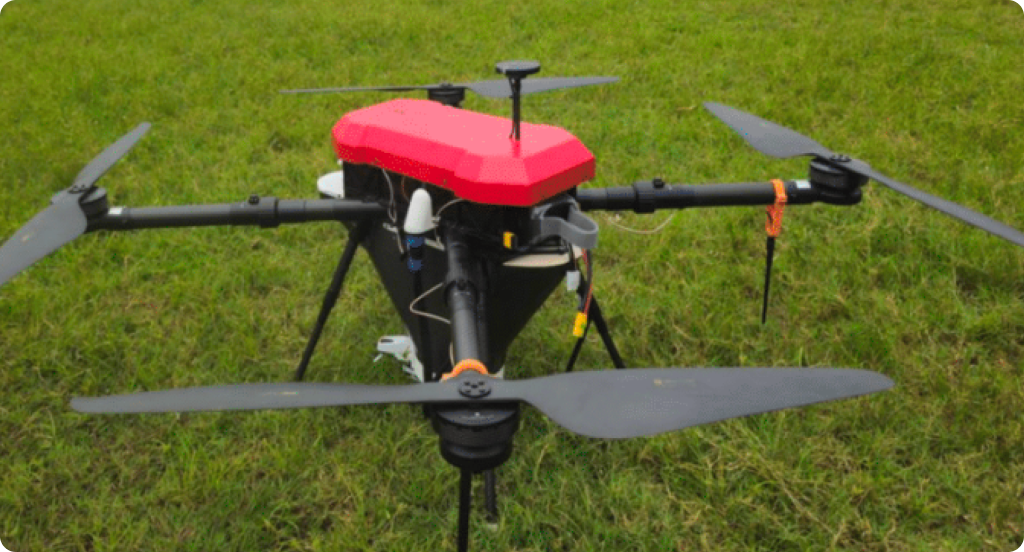
With drones such as the Aviro P120, the accuracy, efficiency, and traceability of natural predator deployment can be dramatically enhanced.
Operational Workflow of Precision Drone Deployment (Aviro P120)
High-precision pest management drones operate on a systematic workflow designed for large sugarcane estates:
Mapping and Flight Planning
The plantation area is digitally mapped, identifying plantation blocks and crop rows. GPS and optional RTK systems enable centimeter-level accuracy in navigation. Flight paths are pre-programmed to ensure complete coverage with minimal overlap, optimizing operational efficiency.
Payload Preparation and Loading
Capsules containing Trichogramma are loaded into the drone’s hopper system. Each capsule is calibrated to ensure controlled release at specific intervals, providing consistent coverage across the crop.
Automated Capsule Deployment
As the drone follows its GPS-guided flight path, capsules are released at precise points above the target crops. Depending on the operational setup, a drone can deploy up to 2,500 capsules per flight. Deployment intervals, flight speed, and altitude are configurable based on plantation size, pest density, and environmental conditions.
Monitoring and Data Logging
Drones automatically record flight paths, release locations, and coverage areas. This information is stored digitally and can be used for operational reporting, planning future interventions, and verifying pest management efficacy.
Repeatable Multi-Block Operations
The system allows multiple sequential flights with battery swaps(rotation) or rapid charging. This enables coverage of up to 30 hectares per flight, or approximately 240 hectares per day, depending on operational constraints.
Technical Capabilities
The Aviro P120 is equipped with several features designed for plantation-scale operations:
Flight Time: Up to 90 minutes per mission
Capsule Compatibility: Supports pellets or capsules with diameters of 16–20 mm
Deployment Speed: Feeder mechanism can release one capsule per second
Mobility: High-mobility copter, portable with hardcase backpack for easy transport
Operational Range: Configurable altitude (2–6 meters above crops) and speed (3–10 m/s) for precise target coverage
By combining these capabilities, operators can efficiently manage pest populations across large estates without excessive labor or machinery.
Advantages of Drone-Based Natural Predator Deployment
Deploying natural predators via drones provides multiple operational, ecological, and economic benefits:
Precision and Targeting
Capsules are delivered directly to the plant level, ensuring that natural predators reach the pest population effectively.
Operational Efficiency
Automated flight paths and capsule release mechanisms reduce labor intensity and improve coverage consistency across large estates.
Traceability and Accountability
Digital logs and mapping provide verifiable records of pest management operations, enabling data-driven decision-making and compliance reporting.
Environmental Stewardship
Using natural predators minimizes chemical pesticide use, protecting soil health, water quality, and non-target organisms.
Scalability
Multiple drones can be deployed sequentially or simultaneously to cover vast plantation blocks within a single operational day.
Field Scenarios and Operational Insights
A typical deployment scenario might involve a P120 drone flying over a 20-hectare sugarcane block, releasing Trichogramma capsules at calibrated intervals. A single flight lasting approximately 25–30 minutes (depending on environmental conditions) can provide complete coverage with minimal supervision. Post-flight, operators review flight logs and geospatial maps to ensure uniform capsule distribution and operational compliance.
Over time, this approach allows plantation managers to reduce reliance on chemical pesticides, improve pest suppression consistency, and demonstrate operational accountability.
Contextual Background: Pre-Drone Practices
Before drone deployment, Trichogramma-based pest management required either manual scattering or mechanized distribution:
Tricho-Cards: Cards containing thousands of parasitized host eggs were manually distributed across the plantation.
Challenges: Manual methods were time-consuming, less consistent, and difficult to scale across large estates.
Advantage of Drones: High-precision aerial deployment reduces labor, improves accuracy, and ensures every plantation block receives consistent treatment.
Operational Impact and Long-Term Benefits
Implementing drone-based natural predator deployment in sugarcane estates like P120 can result in:
Reduced chemical usage and operational costs
Improved pest suppression rates with plant-level targeting
Measurable environmental benefits, including reduced chemical runoff
Scalable operations capable of covering hundreds of hectares per day
Integration with operational dashboards for monitoring, reporting, and planning
By combining technology with ecological pest management, this approach demonstrates how modern plantation operations can achieve precision, accountability, and sustainability simultaneously.
Conclusion: The Future of Pest Management in Sugarcane Plantations
High-precision drone systems for natural predator deployment represent a paradigm shift in sugarcane pest management. By targeting pests at the plant level, reducing chemical reliance, and providing operational traceability, these systems address both productivity and environmental goals. They empower plantation managers to optimize operations, scale pest control across large estates, and implement sustainable, data-driven practices.
As adoption grows, such drone systems will increasingly become central to precision agriculture strategies, setting new standards for operational efficiency, environmental stewardship, and measurable impact in large-scale sugarcane cultivation.
Related blog posts